




There are some names a father gives his daughter that never really belong to childhood.
They begin as something small and affectionate—a name spoken across a room, whispered when she is little, repeated so often that it becomes part of the language between them. Years pass. The little girl grows up. The name remains.
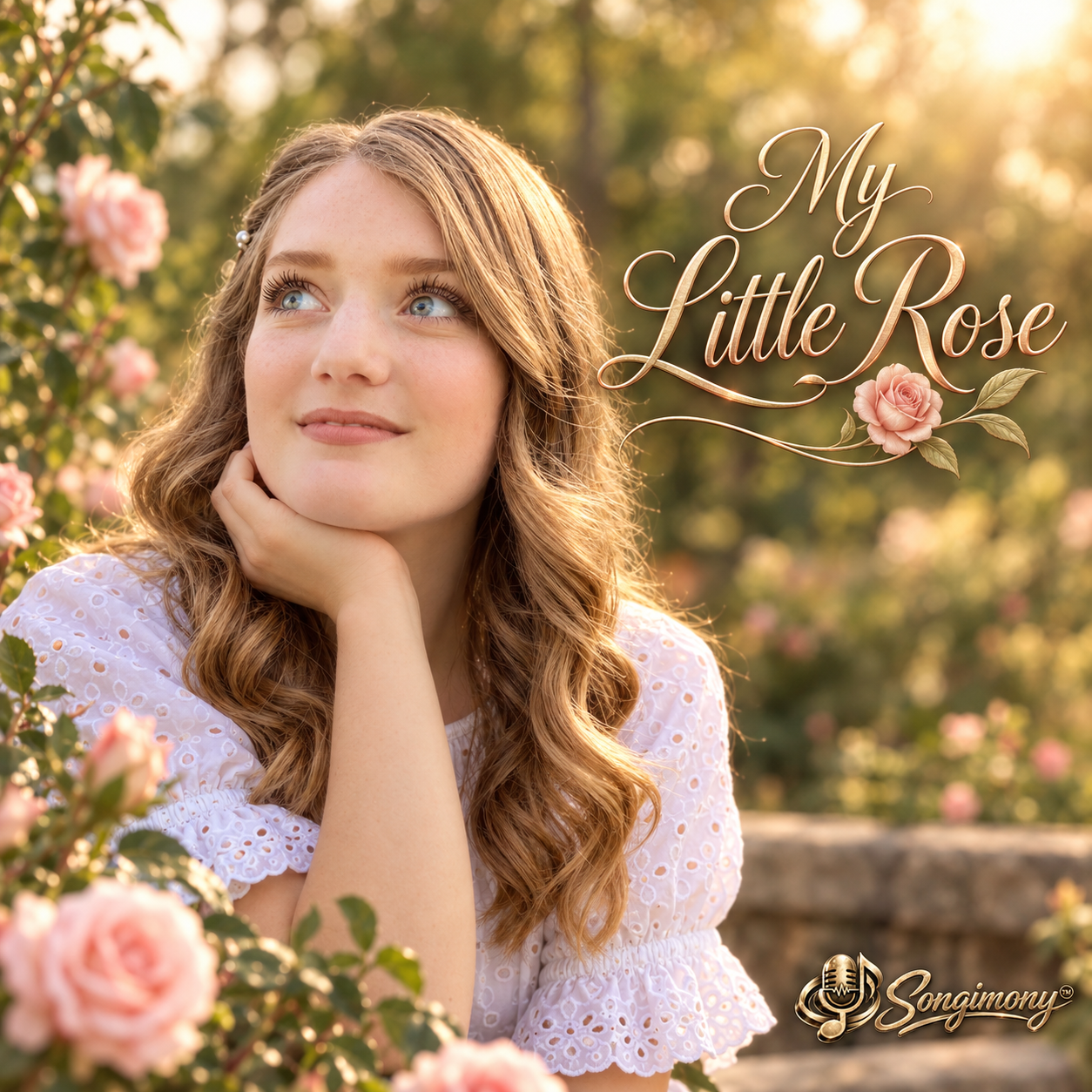
For one father, that name is My Little Rose.
The song that carries that name is not really about childhood, though childhood is where it begins. It is about the strange and beautiful experience of watching a daughter grow from someone who once reached for your hand into a woman who no longer needs you to hold it—and realizing that the love has not diminished. It has changed.
The opening of the song looks backward at the ordinary moments that make up a childhood: tiny footsteps running down the hall, a child’s laughter, scraped knees, curls, dandelions in the breeze, and a little girl who seemed to believe her father could somehow hold the whole world together.
Those details matter because this isn’t a story about an abstract idea of fatherhood. It is about memory. The memories are deliberately familiar because that is how childhood often survives in a parent’s mind—not as a perfectly preserved timeline, but as flashes of small things that somehow became enormous with time.
Then comes the realization that every parent eventually confronts:
She grew up.
The song moves through the stages almost quietly. There is the first day of school, the oversized backpack, the wave goodbye, and the father’s recognition that time does not wait for anyone to catch up. There are lessons learned along the way—falling, rising, discovering who she is, and carrying the marks of difficult days without allowing them to define her.
The father isn’t claiming that he protected her from every hardship. In fact, the song acknowledges the opposite. There are storms he cannot keep away. There are things she must eventually face for herself.
What he can do is watch.
And love.
And hope that the things he tried to teach her will remain when he can no longer be the one standing beside her.
That is where “My Little Rose” becomes more than a song about a daughter growing up. It becomes a song about the changing role of a father.
When she is young, love looks like protection. It looks like holding her hand, watching the first day of school, helping her back up when she falls.
As she becomes an adult, love looks different.
It becomes admiration.
The father begins to see not only the daughter he remembers, but the woman standing in front of him. The song describes her as strong, kind, graceful, and capable of turning difficult experiences into something worthwhile. Whether she realizes it or not, the little girl he remembers has become someone he can look at with the same wonder he felt when she was small—but for a different reason.
He is no longer simply proud of what she might become.
He is proud of who she has become.
That distinction is at the heart of the song.
The recurring use of My Little Rose makes the emotional movement even more personal. The name belongs to two moments in time at once. It belongs to the little girl in his memories, but it is spoken to the grown woman she has become.
That is the beautiful contradiction the song holds.
She is still his little Rose.
And she is no longer little.
The song also leaves room for something many fathers find difficult to say plainly: I don’t know if I did everything right, but I hope you know how completely I love you.
The father’s reflection isn’t presented as a claim to perfection. Instead, he measures his life by something much simpler. If he has done one thing right, it has been loving his daughter the best way he knew how.
That is why the title “The Woman You Became” sits naturally beside the name “My Little Rose.” One looks at the woman in the present. The other reaches all the way back to the little girl who began the story.
Together, they describe what the father sees when he looks at his daughter:
Both.
The child he remembers.
The woman he admires.
And the unbroken thread of love between them.
There is no dramatic event required to make this story meaningful. The significance comes from the accumulation of years. A father watches a daughter become herself, and somewhere along the way he realizes that the child he once thought he was raising has also been teaching him something about love, time, and letting go.
The song’s final thought is therefore not a grand declaration. It is almost a promise.
Someday, when she looks back at the road that brought her here, she should know that her father’s pride did not end when childhood did.
He is still there.
Still watching.
Still loving her.
Still calling her what he has always called her:
My little Rose.
And perhaps that is what the song ultimately preserves—not simply the memory of a little girl, but the voice of a father who wants the woman she became to know that, in his eyes, she was loved through every version of herself.
That is what now exists where there was once only a lifetime of memories: those memories have been gathered into something she can hear.
A father’s voice.
A daughter’s story.
And a name that never grew old.