
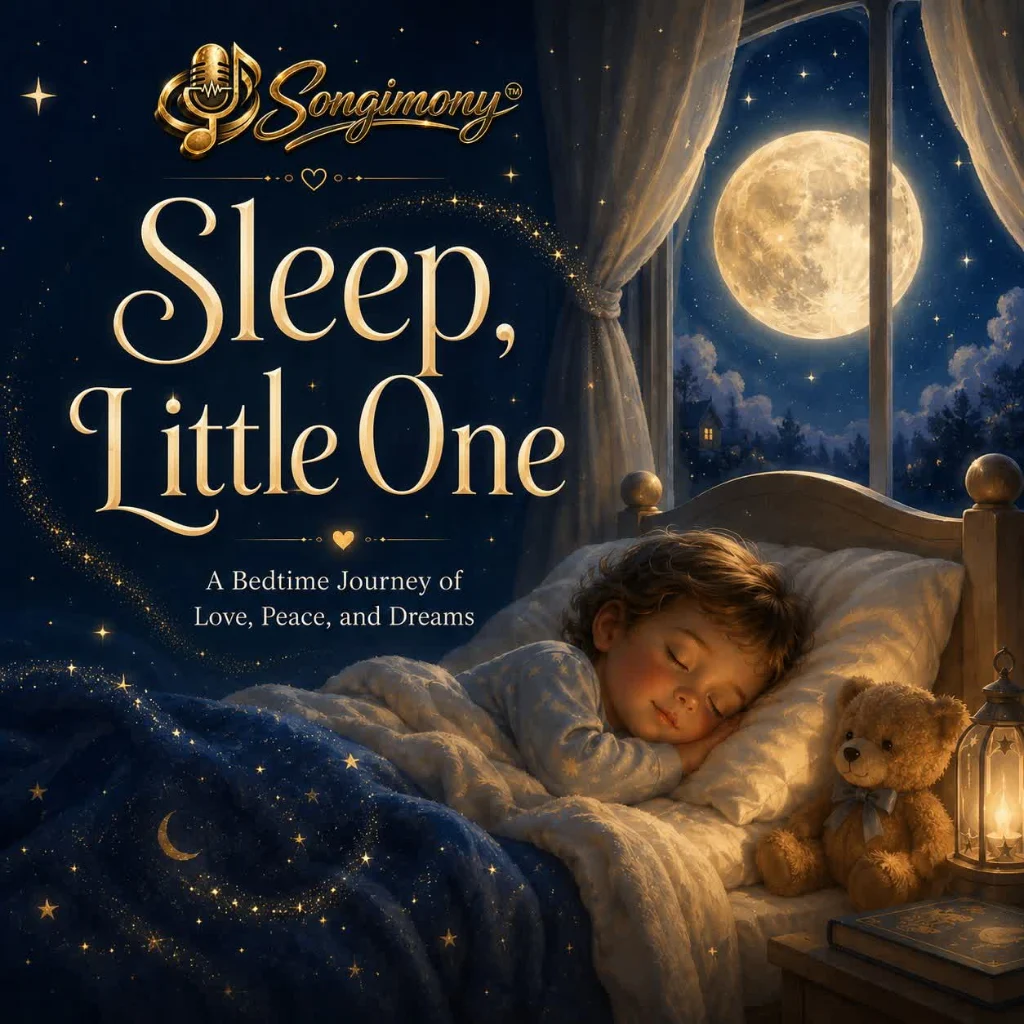
Behind the Music: Sleep, Little One
A Peaceful Journey from Bedtime to Dreamland
There is a moment every night that is remarkably ordinary—and remarkably important.
The house gets quiet. The lights go down. A child climbs into bed, and the world that felt so large and busy during the day suddenly becomes much smaller. There is a blanket, a pillow, a favorite stuffed animal, and perhaps a parent sitting beside the bed.
Then comes the question that children may not always say out loud:
Am I safe? Am I loved? Will you still be here when I wake up?
Sleep, Little One was created around those questions.
This album began with a simple idea: bedtime music should do more than make a child sleepy. It should help create an emotional environment in which a child can settle, feel secure, and let go of the day.
Why a Lullaby Album?
Lullabies are among the oldest forms of music shared between generations. Long before recorded music, parents sang to their children. The melodies were often simple, repetitive, slow, and predictable—not because they lacked sophistication, but because those qualities served a purpose.
A lullaby creates a transition.
It tells a child that the day is finished.
It establishes repetition and familiarity.
It slows the emotional pace of the room.
And, perhaps most importantly, it communicates something through the presence of the person singing:
You are here. I am here. You are cared for.
Research into children’s emotional development, attachment, sleep routines, music, and the role of predictable caregiving informed the philosophy behind this project. Across those fields, a recurring principle is the importance of responsive, nurturing relationships and consistent routines in helping children develop a sense of security.
That became the foundation for this album.
Rather than asking only, “What songs would sound good as lullabies?” we asked a different question:
“What does a child need to hear before they fall asleep?”
The answer shaped every track.
The Four Messages Behind the Music
The album was built around four simple messages:
You are loved.
You are safe.
You are not alone.
Tomorrow will be okay.
Those ideas appear repeatedly throughout the album, but each song approaches them from a different angle.
A child may hear those truths hundreds of times throughout childhood. Repetition is not a weakness here. It is part of the purpose.
A bedtime song doesn’t need to introduce a complicated idea every night.
Sometimes the most important message is the one worth hearing again.
Why These Ten Songs?
The ten tracks were intentionally arranged as a journey rather than as ten unrelated lullabies.
1. Time for Bed
The journey begins with transition.
The child is still connected to the day’s activities. Toys are being put away, the lights are dimming, and bedtime is beginning.
“Time for Bed” acknowledges that transition rather than rushing past it.
The message is simple:
The day is finished. You can rest now.
2. The Moon Knows Your Name
Once the child has settled, the album introduces wonder.
The nighttime sky becomes a place of beauty rather than something unfamiliar or frightening. The moon and stars provide imagery children naturally understand while pointing toward the larger beauty of creation.
The song moves the child from routine into wonder.
3. Daddy’s Arms, Mommy’s Heart
This is the emotional center of the album.
Children need to know that their worth isn’t dependent upon what they accomplished that day. They don’t have to be good enough, successful enough, or happy enough to deserve love.
They are loved because they are themselves.
The song deliberately uses both parental voices to communicate security from two perspectives. It also looks beyond childhood, imagining the day when the child will grow and leave home while assuring them that parental love doesn’t disappear when independence begins.
4. Teddy Bears Wake at Midnight
A bedtime album shouldn’t eliminate imagination.
Children’s imaginations can transform an ordinary bedroom into an entire universe. This song embraces that instinct.
The teddy bears and toys become gentle companions in an imaginary nighttime adventure.
There is no danger.
No villain.
No conflict that needs solving.
Just wonder.
It gives the child permission to dream.
5. Sailing on a Cloud
At this point, the album begins deliberately becoming less grounded.
The imagery shifts from the bedroom to clouds, stars, and dream worlds.
Musically, the production becomes more spacious and atmospheric.
The song’s purpose is essentially:
You don’t have to do anything now. You can simply float.
It is the beginning of the album’s deeper descent toward sleep.
6. Forest Goodnight
The perspective expands again.
Instead of following one child’s bedtime, the song imagines an entire world settling down: birds, rabbits, deer, trees, streams, and the nighttime forest.
There is comfort in realizing that rest is part of creation itself.
Everything doesn’t have to keep moving.
Everything doesn’t have to be awake.
Everything can simply be still.
7. Jesus Watches While You Sleep
The album’s spiritual centerpiece intentionally comes after the natural world has become quiet.
For families who want faith to be part of bedtime, this song offers a simple reassurance about Jesus Christ’s love for children.
Its inspiration includes Christ’s invitation for children to come unto Him.
The language is deliberately gentle rather than theological or complicated. A young child doesn’t need a doctrinal lecture at bedtime.
They need reassurance.
Jesus loves you. You are precious. You are not alone.
The song was designed to function almost like a musical bedtime prayer.
8. Tomorrow Has New Adventures
Children can have busy minds too.
Sometimes bedtime doesn’t bring immediate peace because tomorrow is already occupying today’s thoughts.
This song addresses that gently.
Tomorrow can wait.
There will be new adventures, new discoveries, new opportunities, and new experiences—but none of them need to be carried into the pillow tonight.
The song gives children permission to let tomorrow remain tomorrow.
9. Dreamland
By Track 9, the album stops asking the listener to follow a story.
The music becomes more atmospheric. The imagery becomes softer. The lyrics become simpler.
The goal is no longer engagement.
The goal is release.
This is the musical doorway between being awake and falling asleep.
10. Goodnight, My Little Miracle
The album ends where the entire project began—with the relationship between a parent and child.
After the moon, stars, clouds, forest, imagination, faith, and dreams, the final message returns to something profoundly simple:
You are loved.
The closing song is intentionally written as a blessing.
Not a performance.
Not a grand finale.
A goodnight.
Why So Many Different Musical Styles?
One challenge in creating a children’s lullaby album is avoiding ten versions of the same song.
Children may enjoy repetition, but an album still needs movement.
That’s why the musical language changes as the emotional journey progresses.
The opening songs use acoustic instruments and recognizable lullaby structures.
The middle of the album introduces orchestral imagination, music-box textures, harp, nature-inspired arrangements, and dream-pop atmosphere.
The final songs become progressively quieter and more spacious.
The music itself follows the child’s journey:
Bedtime → Wonder → Security → Imagination → Floating → Peace → Faith → Hope → Dreams → Sleep
The production was also intentionally restrained.
There are no dramatic percussion entrances designed to grab attention. No explosive choruses. No aggressive vocal performances.
A bedtime album should never demand more attention than a sleepy child has left to give.
The Research Behind the Project
The research for Sleep, Little One wasn’t about finding a formula that would guarantee that every child falls asleep.
Children are different. Families are different. Sleep patterns are different.
Instead, the research helped establish principles around the environment we wanted the music to create.
Child-development research consistently emphasizes the importance of nurturing relationships and responsive caregiving. Sleep research also points toward the value of consistent bedtime routines and calming transitions.
Music adds another dimension.
A parent’s voice is deeply familiar to a child. Singing can become part of the relational ritual surrounding bedtime. The purpose of this album, therefore, isn’t to replace that relationship—it is to support it.
That’s an important distinction.
Sleep, Little One was never intended to become a substitute for a parent saying, “I love you.”
It was designed to help create the moment in which the parent can say it.
The Songimony™ Perspective
Songimony has always been interested in the intersection between music and the moments that shape a life.
Sometimes those moments are dramatic.
Sometimes they’re sacred.
Sometimes they’re as simple as sitting beside a child’s bed at 8:30 at night.
That ordinary moment may not feel significant while it is happening.
Years later, however, it can become one of the memories a child carries for the rest of their life.
A particular melody.
A father’s voice.
A mother’s hand on the forehead.
A prayer.
A favorite stuffed animal.
A whispered goodnight.
That’s why this album exists.
Not simply to produce children’s music.
Not simply to create sleep music.
But to help make room for something more important:
connection.
What We Hope Children Hear
We hope children hear beautiful melodies.
We hope they enjoy the moon, the teddy bears, the clouds, the forest, and the dreams.
But underneath all of those stories, we hope they hear the same four truths again and again:
You are loved.
You are safe.
You are known.
You can rest.
And for families who choose to make faith part of their bedtime tradition:
Jesus loves you, too.
The world will still be there in the morning.
The questions can wait.
The adventures can wait.
The toys can wait.
Tonight, a child can close their eyes knowing they are loved.
And sometimes, that is exactly what a little heart needs before it can finally sleep.
Goodnight, little one.