





Behind the Music — Album Editorial
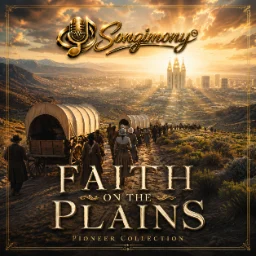
Faith on the Plains is an album about movement—but not simply the movement of people across a continent.
It is about what happens when faith requires a person to leave what is familiar, walk into what is unknown, and keep moving long after the reasons for continuing have become difficult to see.
The album follows the story of the Latter-day Saint pioneer experience across the American frontier, but its purpose is larger than historical retelling. These songs seek to restore the human experience inside the history: the excitement of gathering, the terror of persecution, the loneliness of the trail, the ache of leaving loved ones behind, the desperation of winter, the courage of rescue, and the quiet realization that sometimes faith is simply taking the next step.
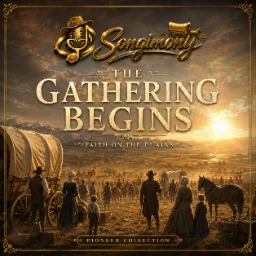
The journey begins with “The Gathering Begins.” There is anticipation in the opening of the story—a people answering a call to gather, believing that somewhere ahead there is a place they have not yet seen but already trust exists.
That faith is quickly tested.
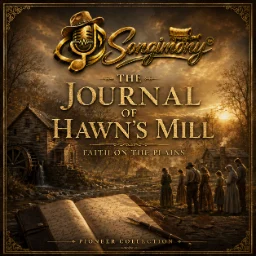
“The Journal of Hawn’s Mill” and “Amanda Barnes Smith” move the album into the personal cost of persecution. History becomes intimate. Names, families, mothers, children, wounds, and memories replace the abstraction of dates and events. The album begins asking an important question: What does faith look like when believing does not prevent suffering?
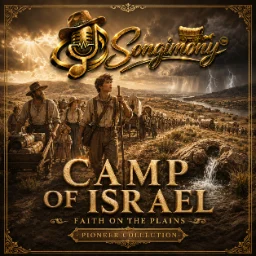
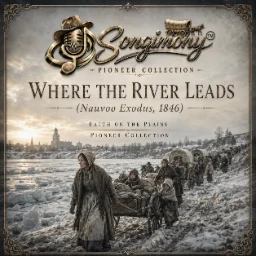
From there, “Camp of Israel” and “Where the River Leads” carry the story westward. The journey becomes physical, but the rivers, roads, camps, and horizons also become metaphors for uncertainty. The pioneers cannot see the entire path. They can only see enough of it to take the next step.
Then comes one of the album’s central questions:
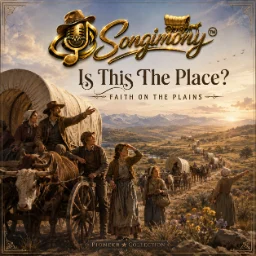
“Is This the Place?”
The question is geographical, but it is also spiritual. After everything that has been sacrificed, endured, and lost, how does a people know when they have finally arrived?
The answer is not simple.
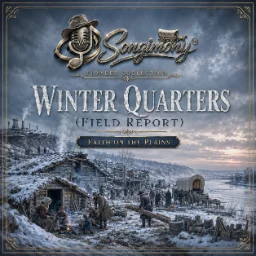
“West of the Wind” and “Winter Quarters” move the album into a quieter, harder portion of the journey. The destination is still ahead, and survival itself becomes an act of faith. The story is no longer primarily about reaching somewhere. It is about continuing when the journey has become exhausting.
Then the album turns toward the companies whose names have become permanently associated with suffering and rescue:
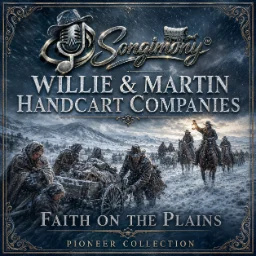
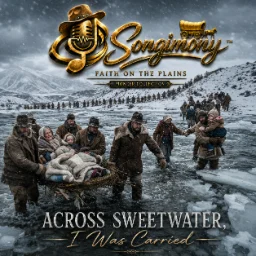
“Circle the Wagons,” “Willie and Martin Handcart Companies,” and “Across Sweetwater.”
Here the album reaches some of its most powerful human territory. The pioneers are no longer merely travelers. They are families protecting one another, exhausted people carrying one another, and rescuers choosing to enter the storm for people they may not even know.
The journey across the plains becomes a story about shared faith.
That idea reaches another expression in “Swing ’Em West.” The album remembers that pioneer history was not composed exclusively of solemn moments. There was determination, personality, humor, music, work, movement, and even joy. The people who crossed the plains were not simply symbols of sacrifice. They were human beings living their lives while history was happening around them.
“This Is the Right Place Still” brings the story back to the question of destination. The pioneers eventually arrived—but arrival did not erase everything that came before. The place became meaningful because of what had been endured to reach it.
And then the album turns inward.
“Borrowed Hope” recognizes that faith is often carried from one person to another. Sometimes a person does not have enough hope for themselves. They survive on someone else’s testimony, courage, prayer, sacrifice, or example until they can find their own.
The final song, “Bad Manger Light,” closes the album by reaching beyond the plains themselves.
After sixteen songs about journeys, persecution, winter, rescue, rivers, wagons, handcarts, and mountains, the story ultimately points toward a different kind of light—the light that makes sacrifice meaningful and gives faith somewhere to rest.
The pioneers were traveling toward a promised place.
But the album suggests that the deeper journey was never merely westward.
It was toward hope.
Toward covenant.
Toward family.
Toward Christ.
And toward the conviction that the next step is worth taking even when the destination cannot yet be seen.
That is the heart of Faith on the Plains.
The album does not attempt to make the pioneers larger than life. It does something more meaningful: it makes them human again.
They were afraid.
They were tired.
They mourned.
They questioned.
They hoped.
They helped one another.
And they kept walking.
The songs that follow will explore those individual moments in greater depth—the people, journals, events, decisions, sacrifices, and emotional perspectives behind each piece.
But taken as a whole, Faith on the Plains is one long musical journey:
They gathered. They suffered. They left. They walked. They wondered. They endured. They rescued. They arrived. And they remembered.
The plains were the setting.
Faith was the journey.