
Behind the Music: Every Giant Falls
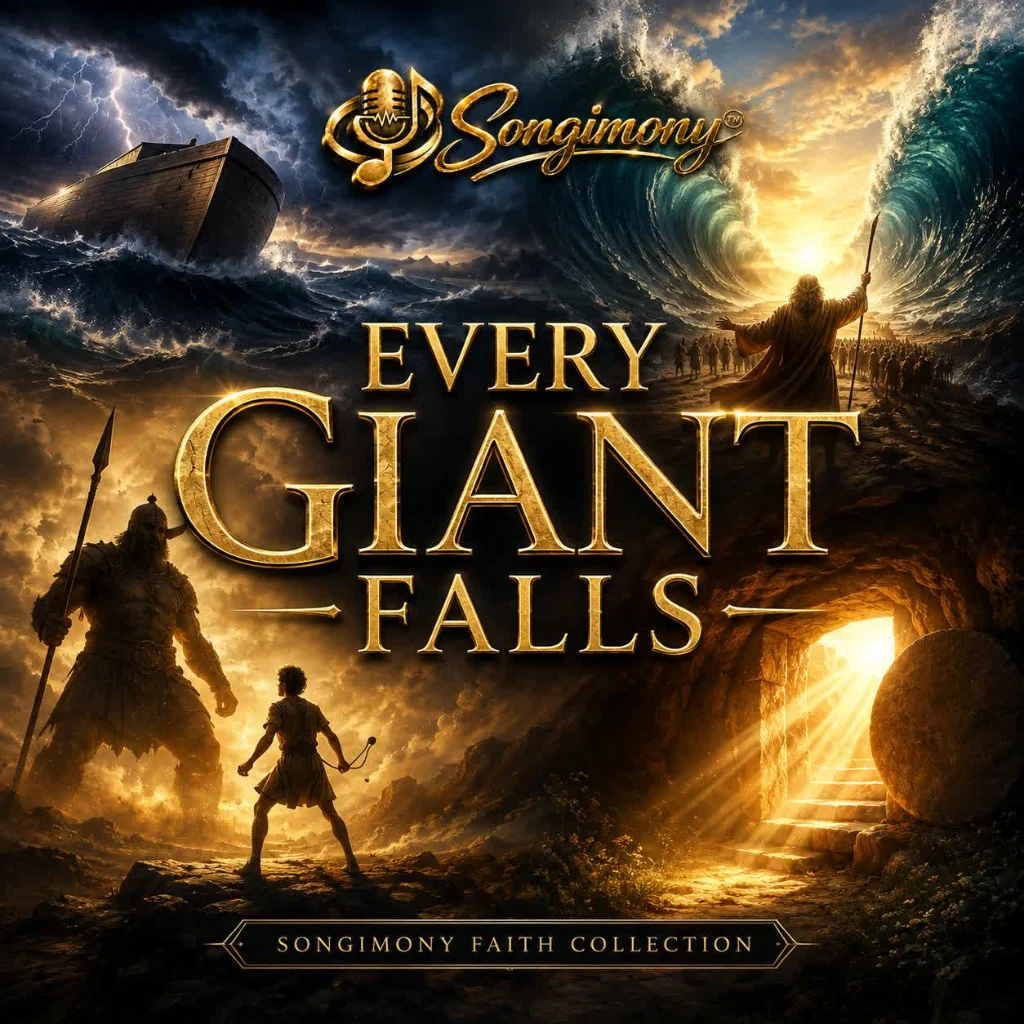
From the Flood to the empty tomb, Every Giant Falls is a 20-song journey through scripture built around one enduring truth: what looks impossible to us is never beyond the power of God.
The album began with a simple question: What would happen if some of the greatest stories of faith in scripture were told not simply as history, but as invitations to believe?
Rather than attempting to retell every major biblical event, Every Giant Falls deliberately selects twenty moments that progressively reveal God’s power. The journey begins with Noah and the Great Flood and moves through deliverance, obedience, courage, miracles, failure, mercy, restoration, and ultimately the resurrection of Jesus Christ.
The stories were selected because each contains a moment when circumstances appeared to have reached an impossible point.
Noah built when there had never been rain. Moses stood before a sea with an army behind him. Joshua faced Jericho’s walls. Gideon went into battle with only 300 men. David faced a giant. Elijah stood before an altar and waited for fire from heaven. Shadrach, Meshach, and Abednego entered a furnace. Peter experienced the crushing weight of failure. The Samaritan woman encountered Christ in the middle of her shame. Lazarus entered a tomb from which no human power could bring him back.
And then comes the ultimate impossibility: death itself.
The album’s progression intentionally moves from obstacles that seem impossible to overcome toward the one obstacle humanity cannot overcome on its own. The resurrection becomes the culmination of everything that came before it. The God who could part seas, bring down walls, answer with fire, preserve His children in the furnace, and call the dead from the grave ultimately demonstrated His power over death through Jesus Christ.
Twenty Stories, One Message
Every Giant Falls is structured as a biblical narrative, but it is not intended to remain in the ancient world.
Each song has two layers.
The first layer tells or reflects upon a recognizable scriptural event. The second turns that event toward the listener.
That structure was intentional.
Noah is not only about Noah. “When the Rain Came” asks what it means to keep building when nobody else understands what God has asked you to do.
“Walk Between the Waves” takes Israel’s passage through the Red Sea and turns it into a picture of moving forward when the path cannot yet be seen.
“When the Walls Came Down” uses Jericho to explore the walls people encounter in their own lives—fear, grief, disappointment, and circumstances that seem immovable.
“300 Strong” reminds listeners that God’s power is not determined by the size of the resources available to us.
“The Heart Inside of Me” moves from David’s anointing to a deeply personal question: What does God see when the world is looking at something else?
“Faith in the Field” explores the years David spent unseen as a shepherd, emphasizing that preparation often happens long before anyone recognizes its purpose.
“No One Saw the Lion” focuses on David’s private battle with the lion and bear, suggesting that some of the most important victories in our lives happen where nobody else is watching.
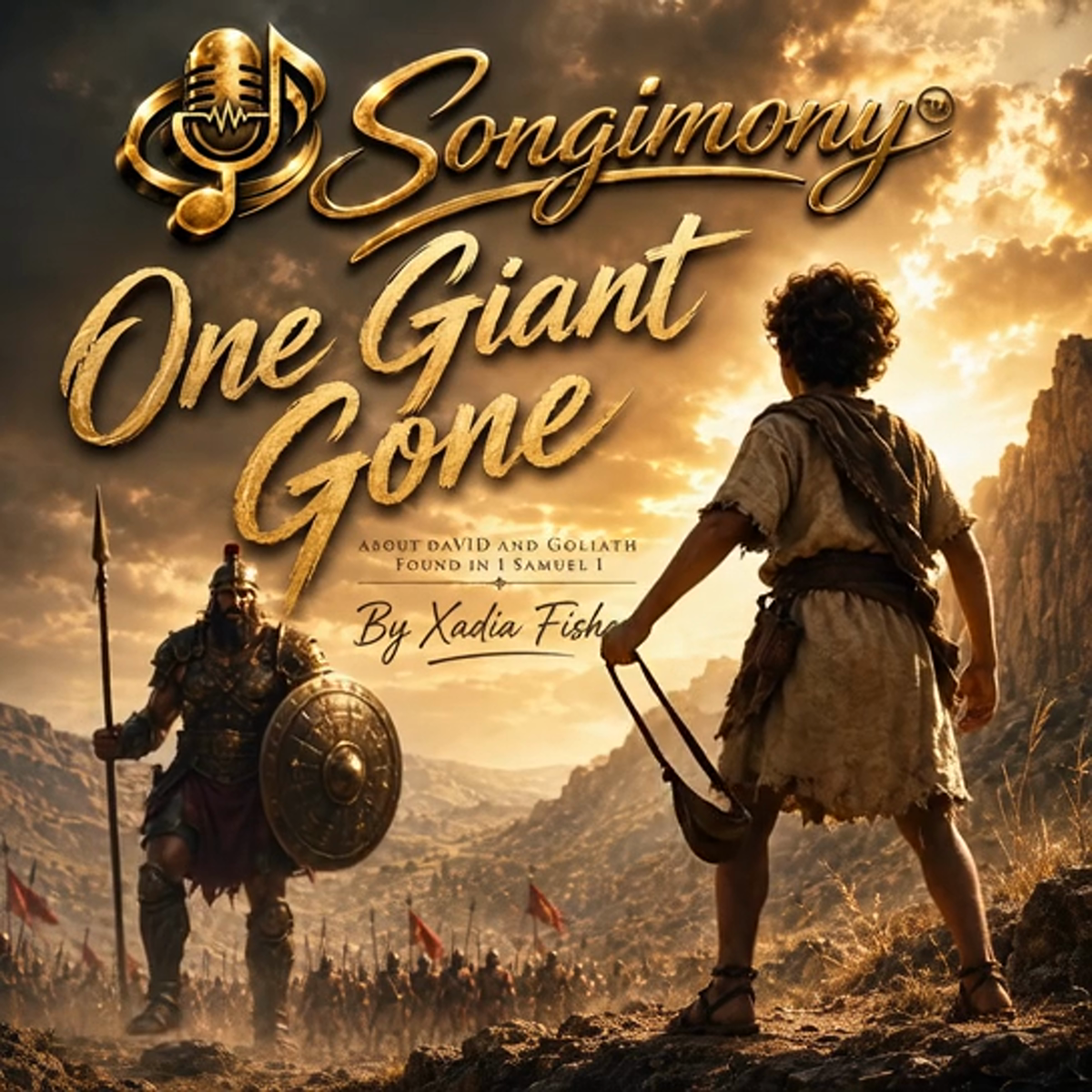
Then comes “One Giant Gone,” where the private preparation meets the public battle.
The album continues to move through scripture, but the pattern remains: biblical event → spiritual truth → personal application.
The listener is never meant merely to admire the people in these stories. The invitation is to recognize something of their own life inside them.
The Impossible Gets Bigger
One of the most deliberate elements of the album is its escalating sense of impossibility.
A flood.
A sea.
A fortified city.
An overwhelming army.
A giant.
Fire from heaven.
A furnace.
Personal failure.
Shame.
Storms.
A grave.
The obstacles become increasingly personal and increasingly final.
That progression eventually brings the listener to “Come Out,” the story of Lazarus, and then “The Stone Rolled Away,” the resurrection of Jesus Christ.
This is where the album’s central idea reaches its fullest meaning.
If God can make a way through the sea, there is hope when there appears to be no path.
If God can bring down Jericho, there is hope when a wall appears immovable.
If God can strengthen 300 men against an overwhelming army, there is hope when our resources seem inadequate.
If God can stand with His children in the furnace, there is hope when the fire cannot be avoided.
If Christ can call Lazarus from the tomb, there is hope when something appears permanently lost.
And if Christ Himself can rise from the grave, then the album’s message reaches beyond overcoming life’s difficult circumstances. It becomes a declaration of Christian hope: death itself is not the end.
The Stories of Failure Matter Too
Not every giant in the album is an enemy standing across a battlefield.
Some giants are inside us.
That is why songs such as “Step Out Again,” “Living Water Knows My Name,” “Love Stops Here,” and “Running Home” are essential to the album’s architecture.
Peter’s giant was failure.
The Samaritan woman’s burden was shame and isolation.
The wounded man in the Good Samaritan’s story represents the human need for mercy.
The prodigal son’s giant was the distance he had created between himself and his father.
These songs broaden the meaning of the album’s title.
A giant does not have to be nine feet tall.
Sometimes the giant is regret.
Sometimes it is fear.
Sometimes it is loneliness.
Sometimes it is the belief that we have gone too far to come home.
Sometimes it is the conviction that something in our life is beyond repair.
The album argues through scripture that God’s power reaches those places too.
From “There Was Another in the Fire” to “Peace in the Wind”
The album also recognizes that God’s power does not always mean removing the trial.
The three Hebrews were still thrown into the furnace.
The disciples were still in the boat when the storm came.
The Red Sea was still in front of Israel before it parted.
That distinction matters.
“There Was Another in the Fire” is not simply a song about escaping the flames. It is about discovering that God’s presence can accompany us through them.
Likewise, “Peace in the Wind” is not built around the idea that storms never happen. The disciples experienced the storm while Jesus was physically in the boat with them.
The personal application becomes clear: sometimes God’s miracle is changing the circumstance, and sometimes the miracle is knowing we are not facing the circumstance alone.
Why This Musical Style?
The musical approach was chosen to make the biblical stories feel immediate rather than distant.
Every Giant Falls draws from cinematic pop, atmospheric alternative R&B, contemporary Christian textures, folk-pop storytelling, and modern inspirational songwriting. The goal was not to create a traditional biblical soundtrack, but to make these ancient stories sound emotionally relevant to a listener living in the present.
The production is designed to breathe.
Quiet verses create intimacy. Atmospheric textures allow the listener to enter the story. Melodic choruses provide the emotional release. Larger cinematic moments appear when the biblical narrative demands them.
That contrast is important.
Noah’s quiet obedience should feel different from the violence of the flood.
The stillness before Jericho’s walls fall should feel different from the sound of the trumpets.
David standing before Goliath should begin with vulnerability before becoming triumphant.
Elijah’s altar should build toward the arrival of fire.
The furnace should feel dangerous before the presence of the fourth figure changes everything.
And the resurrection should feel like the release of every tension that has been building throughout the album.
The music therefore follows the emotional architecture of the stories rather than simply decorating them.
Who Is This Album For?
Every Giant Falls was created for anyone who needs to remember that their present circumstance is not necessarily the end of their story.
It is intended for believers who know these scriptures and want to experience familiar stories from a more personal perspective.
It is also intended for listeners who may know only pieces of the Bible but understand what it feels like to face something bigger than themselves.
For teenagers facing uncertainty.
For young adults trying to discover their direction.
For parents carrying responsibilities they sometimes feel unprepared to carry.
For people navigating grief, failure, fear, disappointment, or change.
For someone quietly fighting a battle nobody else knows about.
And for anyone who simply needs the reminder that faith does not require knowing how the story will end before taking the next step.
The album is ultimately not about pretending that life’s giants are small.
It is about recognizing that God is greater than they are.
The Journey Ends Where Christian Hope Begins
The final songs deliberately move from Christ’s victory over the grave toward the command to carry that message into the world.
“The Stone Rolled Away” is not merely the conclusion of a biblical story. It is the answer to everything that came before it.
The flood could not stop God’s promise.
The sea could not stop His people.
The walls could not stop His purpose.
The army could not stop His deliverance.
The giant could not stop David.
The furnace could not consume His servants.
The storm could not overpower Christ.
The grave could not hold Lazarus.
And ultimately, the tomb could not hold Jesus.
That is why the album closes with “Go Tell the World.”
The resurrection is not simply the final event in the chronology. It is the reason the entire journey matters.
The message of Every Giant Falls is therefore bigger than “you can defeat your problems.”
It is a message of faith, hope, grace, and redemption:
God is still God when the obstacle is bigger than you. God is still present when the answer has not come. God still sees you when nobody else does. God still calls you when you have failed. God still makes a way when there appears to be no way. And because Jesus Christ overcame the grave, even death does not have the final word.
Every Giant Falls begins with a world covered by water and ends with an empty tomb.
Between those two moments are twenty stories reminding us of one truth:
What looks impossible from where we stand may be exactly where God intends to show us what He can do.